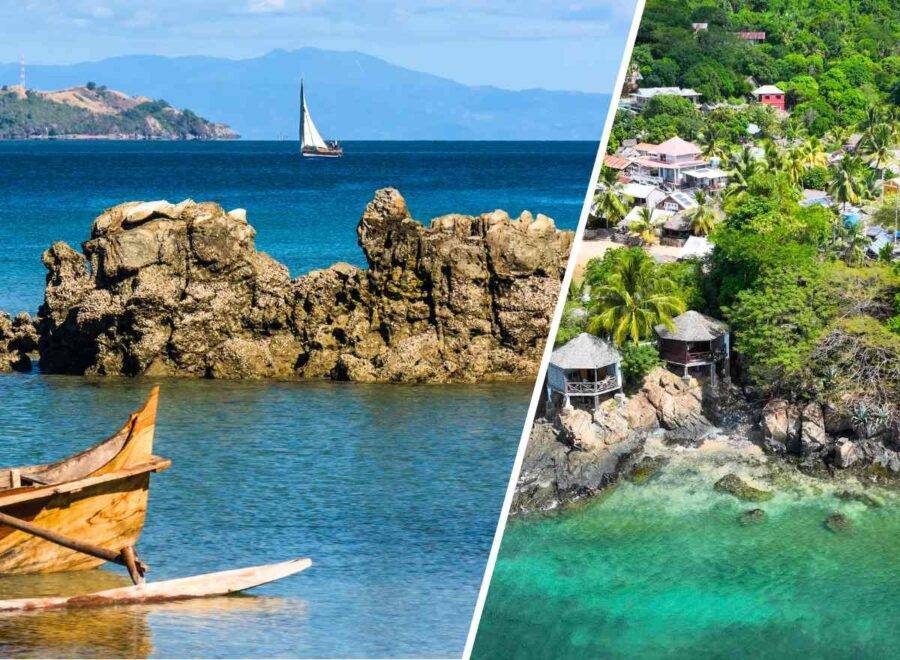
The best time to go whale watching in Madagascar is from June to September. Whales are fascinating creatures, their awe-inspiring size and mysterious habits have earned them legendary status among sea-dwelling mammals. Madagascar is a fantastic place to spot these great giants of the deep.
The Best Time to go Whale Watching in Madagascar
From June to September great numbers of Humpback whales travel to the warm waters of Madagascar to breed and calve and put on a spectacular display of breaching and splashing just offshore. They then migrate around the island on a specific route before returning to the cold waters of the Antarctic. Other marine giants such as Whale Sharks can be found year-round, you just need to know where to look…


Ile St Marie
The Ile St Marie just off the eastern coast of Madagascar is the perfect spot to observe the humpback whales who visit the area from June to September. Not only is it a Madagascar Island top destination, it is also a stunning beach paradise of white sands and palm fronds, as well as the location of a pirate cemetery dating from hundreds of years ago, but also uniquely positioned as a haven for the humpback whales who call the narrow canal between the island of Île St Marie and Madagascar their home during this time. Travellers can spot the cetaceans easily from the shore or venture out by boat with a responsible conservation-focused company to experience the whales breaching and slapping their tails all around them.
Conservation practices are now more important than ever, as Île Sainte-Marie is a hotspot for marine biodiversity. Organizations like WWF play a vital role in preserving these habitats, supporting sustainable tourism, and promoting responsible diving and snorkeling. Whale watching in Madagascar done responsibly allows travelers to enjoy the island’s natural beauty while helping protect its fragile marine ecosystems.
The groups of migrating whales from the Antarctic split in two when reaching Madagascar which means that a percentage of the group heads to Ifaty in the Northwestern region of the island instead of Île St Marie. They are there during the same time period and for the same purpose so if your itinerary finds you on that side of Madagascar, you too will have a chance to view the whale pods in their hundreds.
As the whales move around the island with their young they can be observed while on our Tsarabanjina luxury getaway or spotted at Nosy Be on the western side of the island from the months of August to November. Nosy Be is also a fantastic area to see and even swim with Whale Sharks, who aren’t actually whales but as the largest fish in the sea, match their size and gentle nature. Nosy Be is well known for its excellent snorkelling and scuba diving. As whale sharks are generally placid creatures who only eat plankton it is possible to swim practically alongside them under the water, of course, touching or disturbing them is not allowed.
The area around Nosy Be, including Nosy Iranja, is also the location where an incredibly rare species of whale, Omura’s Whale, has been observed in the largest pod ever discovered. A group of 80 whales including calves were found here in 2016 and it is believed that they are resident to the area, this is incredibly exciting for marine biologists who have set up research centres in the area. Keen whale spotters are in for a real treat when visiting Madagascar.
This island nation well known for its extraordinary wildlife on land also provides amazing marine wildlife sightings and nature certainly lovers won’t leave disappointed.
Interested? Check out our Nosy Be Diving & Wildlife Adventure for your chance to swim with whale sharks, our Île Sainte-Marie Beach Package for some whale watching in Madagascar, or explore our other Madagascar diving safaris for even more variety.
Bookings: info@jenmansafaris.com
Talk To Us: +27 21 683 7826